
Intended Use
SkyWalker Robotic-Assisted Surgical System is intended to assist the surgeon in providing software-defined spatial boundaries for orientation and reference information to anatomical structures in Total Knee Arthroplasty (TKA) and Total Hip Arthroplasty (THA) procedures.
Use Scenario
SkyWalker Robotic-Assisted Surgical System is used in TKA and THA to assist doctors in pre-surgical planning and intra-operative resection and grinding. The main indication is Total Knee Arthroplasty (TKA) and Total Hip Arthroplasty (THA) procedures. he workflow of the SkyWalker System contains preoperative procedure and intraoperative procedure. Before surgery, Surgical Navigation Software within the Skywalker System assists the surgeon with preoperative planning by using patient CT data and providing reference information to anatomical structures to make a surgical plan for the TKA and THA surgery, which is called preoperative procedure. When entering the intraoperative procedure, the Skywalker System provides stereotactic guidance to assist the surgeon with real-time orientation of the end tool to a target position with a target pose for the accurate knee and hip resection.
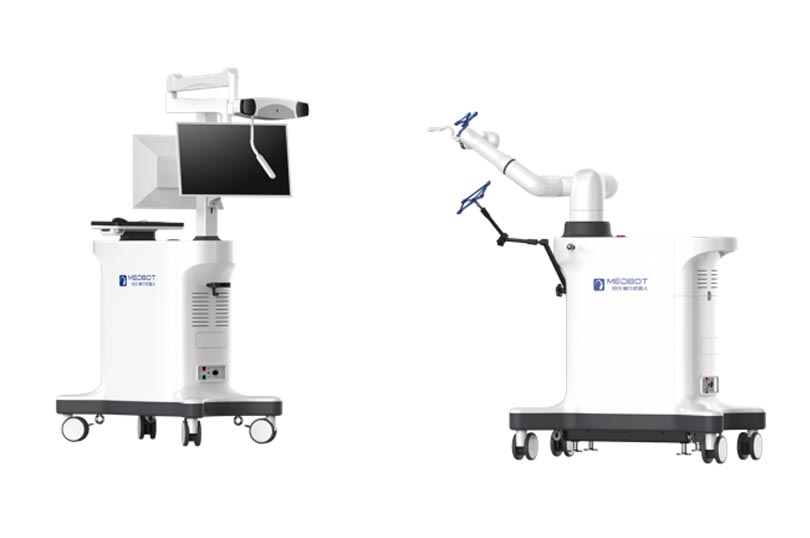
Product information
SkyWalker Robotic-Assisted Surgical System includes in overall: Navigation Console, Surgical Console, Planning Laptop (including preoperative planning software), Power Tool, Software System, Knee Instruments, Hip Instruments and Disposables. Surgical Console includes Robotic Arm and Robotic Arm Trolley. Navigation Console includes Navigation Trolley, Optical Tracking Device, Primary Minitor and Surgeon Monitor. Knee Instruments include Knee Kit and Leg Positioner. Knee Kit includes Cutting Block, Tracker Fixation and Installation Component and Knee Tray. Hip Instruments include Hip Kit, in which Hip kit-1, Hip kit-2 and Superpath Kit are included.Software System includes Surgical Navigation Software, Motion Control Software and Power Board Embedded Software.Disposables include Standard pin, Long pin, Nail, Tracker screw and Marker.
Instructions for Use (IFU)
For customer service and complaints or adverse events, please seek customer service according to the following information, including ordering, complaints or adverse event reporting, and get access to the product information and service information of Microport NaviBot (Suzhou) Co., Ltd.
MicroPort NaviBot (Suzhou) Co., Ltd
No.3 Workshop, No.151 Fengli Street, Suzhou Industrial Park, Suzhou, Jiangsu, 215024, China
Tel.: 400-900-3155
Email: MB-service@microport.com
Accessories
Base Tracker: Working with marker for tracking the base position of the robotic arm.
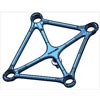
Tunnel Guide Platform: Working with the tunnel guide tube for guiding pins.
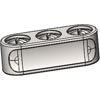
Femur Tracker: Working with the marker and attached to the femur by pins and fixation components for tracking the position of the femur.
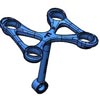
Point Probe: Working with the marker for collecting patient’s anatomical points and verifying positions.
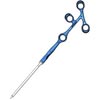
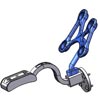
Cutting Block and Cutting Block Tracker: Working with the marker, monitoring the position of the cutting block, mounted at the end of the robotic arm for guiding knee cutting
Patient selection and Contraindications
Target Patient population: Eligible patients to undergo Total Knee Arthroplasty (TKA) and Total Hip Arthroplasty(THA) surgery. SkyWalker Robotic-Assisted Surgical System is to be used with the following implant systems including EVOLUTION ®MP,EVOLUTION® NitrX™, EVOLUTION® REV, EVOLUTION® Revision, ADVANCE® PRIMARY, ADVANCE® STEMMED, ADVANCE® II, ADVANCE® ONLAY, ADVANCE® OFFSET, PROCOTYL® P Shell, PROCOTYL® ceramic, PROCOTYL® P Liners, PROCOTYL® Z , PROCOTYL® Xm, PROCOTYL® L, PROCOTYL® P AM, PROCOTYL® P PS, RIM-LOCK BIOLOX DELTA CERAMIC LINER, PROCOTYL® P Lipped A-Class® liner, PROCOTYL® P Lipped E-Class® Liner, PROCOTYL® P Std A-Class® liner, PROCOTYL® P Std E-Class® Liner, PROFEMUR® Z, PROFEMUR® GLADIATOR® Classic, PROFEMUR® Preserve ClassicPROFEMUR® GLADIATOR® CEMENTED, PROFEMUR® GLADIATOR® Thin, PROFEMUR® GLADIATOR® CLASSIC, PROFEMUR® PRESERVE, PROFEMUR® XM", PROFEMUR® L, COCR FEMORAL HEAD, BIOLOX® DELTACoCr Heads.
Contraindications:
•Active infections of the knee joint area
•Contraindications for the implant as given by the implant manufacturer
•Selecting a patient to receive a surgery from a SkyWalker Robotic-Assisted Surgical System should be based on the surgeon’s judgement of the patient’s conditions.
•A surgeon must always rely on his or her own professional clinical judgment when deciding whether to use a particular product when treating a particular patient. NaviBot does not dispense medical advice and recommends that surgeons be trained in the use of any particular product before using it in surgery. Meanwhile, using a specific joint prosthesis system is required. Before preparing for the navigation-assisted THA or TKA, the surgeon should also consider the following:
•The integrity of the hip joint junction is necessary to complete the TKA bone registration;
•Metal objects in the vicinity of the surgical area may affect the quality of the CT scan and thus the accuracy of the surgical planning;
•Patients with infections or recently-infected patients are not suitable to receive the surgery;
•Patient size has an effect on the complexity of the procedure, so it is required to evaluate the patient’s BMI pre-operatively;
•Deficiency or instability of ligamentous structures may affect the joint stability after the surgery;
•The impact of conspicuous deformities (e.g., spinal deformity, sacroiliac joint deformity, pelvis with severe bilateral developmental imbalance, or excessive pelvic flexion deformity) on the surgery needs further evaluation.
•Other factors that surgeons believe may affect the proper performance of the surgical procedure.
Please Note
For clarifications for and help, please contact your local representative. This product and its IFU are applicable to the European Union and comply with applicable laws and regulations of the European Union, especially the Regulation (EU) 2017/745.
Product Specification
| Power supply parameters | |
| Input voltage | 220-240VAC |
| Frequency | 50/60Hz |
| Input power | 1200VA |
| Battery type | 300VAUPS-BAT/PB/24DC/4AH-1274117 |
| Battery spec | Rated Input: 24Vdc Max Output: 24Vdc / 25A |
| Adaptive CT parameters | |
| Protocol | DICOM |
| Resolution efficiency | 512 x 512 |
| Layer thickness | ≤ 1 mm |
| Environment parameters | |
| Operation Temperature | +10°C- +30°C |
| Operation Relative Humidity | 10%-90%, non-condensing |
| Operation Atmospheric Pressure | 70 kPa-106 kPa |
| Transport and Storage parameters | |
| Transport and storage temperature | -10°C ~ +40°C |
| Transport and storage relative humidity | 10% to 90%, non-condensing |
| Transport and storage atmospheric pressure | 70 kPa-106 kPa |
The other condition that surgeons consider unsuitable for surgery:
•The integrity of the hip joint junction is necessary to complete the TKA bone registration;
•Metal objects in the vicinity of the surgical area may affect the quality of the CT scan and thus the accuracy of the surgical planning;
•Patients with infections or recently-infected patients are not suitable to receive the surgery;
•Severe osteoporosis affects the stability of the implants;
•Patient size has an effect on the complexity of the procedure, so it is required to evaluate the patient’s BMI pre-operatively;
•Deficiency or instability of ligamentous structures may affect the joint stability after the surgery;
•The impact of conspicuous deformities (e.g., spinal deformity, sacroiliac joint deformity, pelvis with severe bilateral developmental imbalance, or excessive pelvic flexion deformity) on the surgery needs further evaluation.
•Other factors that surgeons believe may affect the proper performance of the surgical procedure.
Safety 
Operation and Maintenance
•The product shall only be used in accordance with its instruction manual. Failure to follow the instruction manual, warnings and precautions will result in risks and serious consequences.
•Only use components and accessories listed in this manual. Failure to do so may harm or reduce procedure effectiveness.
•Modification of equipment is prohibited without authorization from MicroPort NaviBot. Only MicroPort NaviBot authorized technicians may service the device. Fuse replacement is performed by authorized technicians.
•Improper use and maintenance, and failure to use for the intended purpose can cause danger to patients and users, or premature wear or damage to the product.
Biocontamination and Infection Control
Operators working in the surgical field should avoid contact with any part of the robotic arm trolley not covered with a sterile barrier or any part of the navigation trolley.
Before entering OR, make sure all unsterilized accessories and disposables to be reprocessed.
Disposable Components
Do not reuse components identified as disposable. Reusing single-use devices can lead to potentially serious consequences for the patient including cross infection, injury, diagnostic errors, and ineffective care.
Electrical Hazard
•The system can only be operated with the supplied power cable.
•Never use the device with the housing removed and only use it in a horizontal position.
•To avoid the risk of electric shock, this equipment must only be connected to a grounded supply main.
•Do not expose the arm or navigation trolley to excessive amounts of water or other liquids. They are not waterproof and electric shock or damage to the system may result.
•Check power and other cables for damage when connecting to the system. Verify that connectors are not damaged and that there are no tears or exposed wires throughout the cable. Defects such as loose plugs, cable failure, or other defects that can interfere with safety and image quality shall be replaced immediately.
•Non-authorized ME equipment must not be connected to the device.
Electromagnetic Interference
•The emissions characteristics of this equipment make it suitable for use in industrial areas and hospitals (CISPR 11 class A). If it is used in a residential environment (for which CISPR 11 class B is normally required) this equipment might not offer adequate protection to radio-frequency communication services. The user might need to take mitigation measures, such as relocating or re-orienting the equipment.
•Do not use the SkyWalker System near NMR (Nuclear Magnetic Resonance) equipment. This may damage or effect the operation of the device and may lead to artificial artifacts. Please observe the NMR manufacturer's requirements and safety tips.
•Ensure that all equipment operated in the vicinity of the system meets similar EMC requirements.
Fire or Explosion Hazard
•Use of the product near flammable materials is prohibited.
•Under no circumstances should the device be used in an explosive environment.
•Do not use extension cables to avoid insufficient power or equipment damage. The system must be powered directly using the system power cable and standard hospital 120v socket.
•ME EQUIPMENT must be connected to an appropriate power source.
•Before lifting the Robotic Arm Trolley, check that there are no obstacles in the area.
•Before the operation trolley is raised, the ground should be checked to if it is flat. It is not advised to raise the trolley on the sloping ground (over 15 degrees).
•All implant plans need to be confirmed by the surgeon before the operation can be carried out.
Risk of incorrect landmarks
•If the feature axis is selected at the wrong position, the wrong implant plan may be carried out, which may damage the patient.
•If the resection reference point is selected at the wrong position, it may lead to wrong calculation of osteotomy volume and harm.
•Wrong landmarks may also cause wrong preview of bone registration points and affect the accuracy of bone registration.
•The selection of landmarks is closely related to the parameter values (Varus angle, rotation angle, osteotomy volume, etc.) in the implant plan. The parameter values in the implant plan may change by changing the landmarks.
@Copyright 1998-2021,Shanghai Microport Medbot(Group)Co.,Ltd. All rights reserved.
Website record/ license No.:沪ICP备20013662号
 Hu ICP Bei No. 20013662 HGWA Bei No. 31011502015178
Internet Drug Information Service Qualification Certificate No.: (Hu) - Non-operating -2021-0020
The registered trademarks of “微创", "MicroPort" and"  " are registered trademarks of Shanghai MicroPort Medical (Group) Co., Ltd.” . They have been authorized to be used by Shanghai Microport Medbot (Group) Co., Ltd., and no other party shall use such trademarks without prior written permission thereof.